Streptococcus uberis
Sector Strep (streptococci), small dark blue colonies.
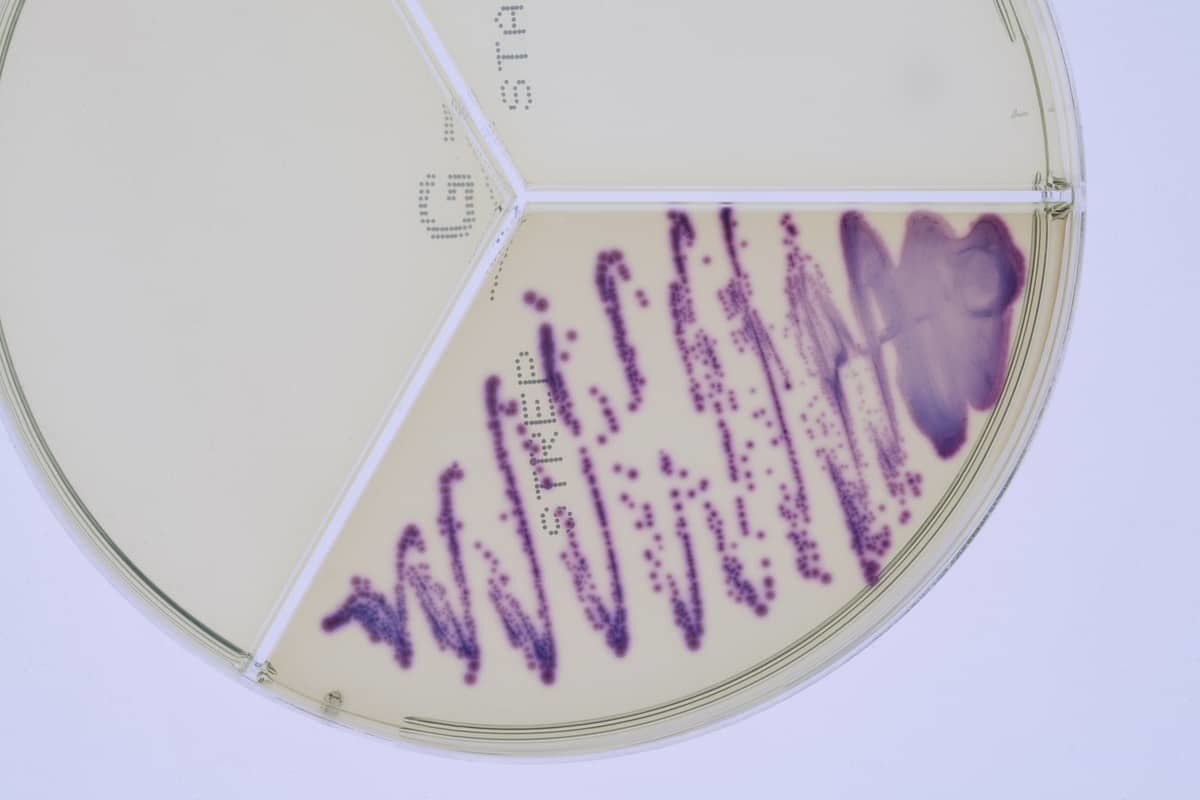
After reducing the occurrence of bacteria Streptococcus agalactiae and Staphylococcus aureus in farming, Streptococcus uberis is the most common cause of mastitis in dairy cows. The inflammation of the mammary gland usually has a creeping development, complicated treatment, and frequent recurrent infections. Streptococcus uberis has the ability to gradually attack the quarters of the mammary gland one by one, and infections are often seen in různých stádiích development in více čtvrtích at once. Some strains of Streptococcus uberis are considered so-called environmental pathogens that predominantly cause subclinical mastitis of a chronic nature.
According to the current view, there are more strains of these streptococci spreading by contact, and in 1990 a new species Streptococcus parauberis was also distinguished, which is more aggressive, has the ability to destroy mammary tissue, and has higher resistance to antibiotics.
The increase in the number of mastitis caused by bacteriaí Streptococcus uberis occurs due to several factors: inadequate hygiene, stress, and decreased immune system function. Streptococcus uberis in the herd often causes a high number of recurring (so-called recurrent) mastitis.
