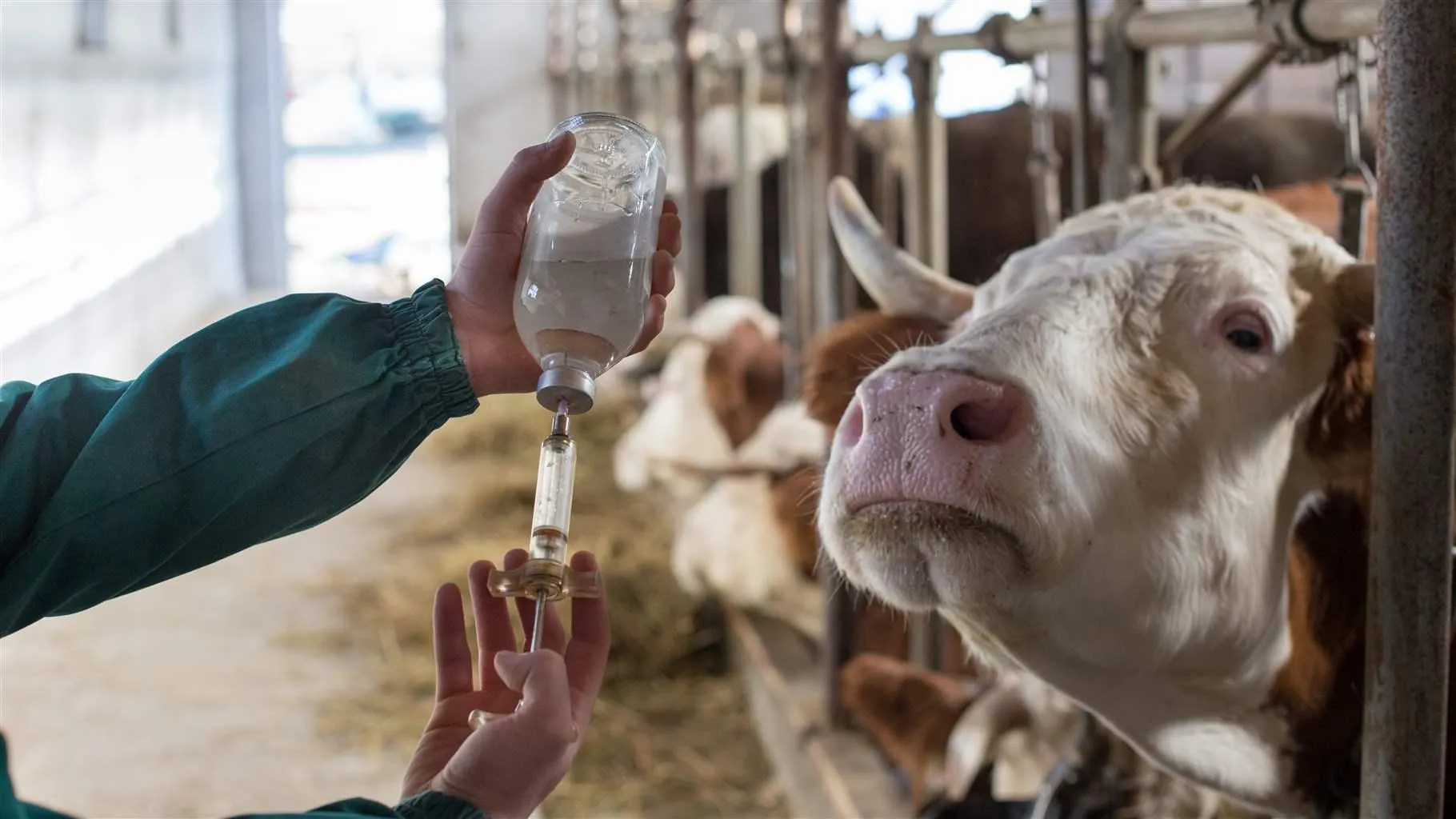
What is Antibiotic Resistance in Cattle Farming
Antibiotic resistance is the ability of bacteria to resist the effects of antibiotics to which they were previously susceptible. In dairy herds, resistance mainly affects bacteria that cause mastitis—Staphylococcus aureus, Streptococcus uberis, E. coli, Klebsiella pneumoniae, and others.
The emergence of resistance is a natural biological phenomenon—bacteria adapt to the selective pressure of antibiotics through mutations or the transfer of resistance genes. Improper antibiotic use dramatically accelerates this process:
The emergence of resistance is a natural biological phenomenon—bacteria adapt to the selective pressure of antibiotics through mutations or the transfer of resistance genes. Improper antibiotic use dramatically accelerates this process:
- Blanket use without a confirmed infection
- Repeated use of the same product
- Inadequate dosage or treatment duration
- "Blind" treatment without an antibiogram
As a result, antibiotics stop working when they are truly needed. For farmers, this translates to longer and more expensive mastitis treatments, a higher risk of economic losses, and ultimately the forced culling of chronically infected cows.
It should be emphasized that it is the bacteria that become resistant, not the cows. However, a resistant strain in the udder of a single cow easily spreads to other cows via the milking equipment—which is why resistance is always a herd-level problem, not an individual cow issue.
It should be emphasized that it is the bacteria that become resistant, not the cows. However, a resistant strain in the udder of a single cow easily spreads to other cows via the milking equipment—which is why resistance is always a herd-level problem, not an individual cow issue.
Data: Antibiotic Consumption in European Livestock Production
The European Medicines Agency (EMA) monitors the consumption of veterinary antibiotics under the ESVAC (European Surveillance of Veterinary Antimicrobial Consumption) program.
Key EU trends
- 2011 → 2022: ~50% decrease in veterinary antibiotic consumption in the EU (from 161 to ~85 mg/PCU)
- 2030 Target: a further 50% reduction relative to 2018 (Farm to Fork Strategy)
- Czech Republic (2022): approx. 60 mg/PCU — below the European average, but with room for improvement
Consumption by Animal Species
Dairy cattle account for 10–15% of total veterinary antibiotic consumption in the EU. The majority of antibiotics in primary cow milk production are administered for:
- Lactational mastitis (~40% of antibiotics)
- Dry cow therapy (~30%, often blanket application—which is problematic today)
- Reproductive disorders (~15%)
- Purulent hoof diseases (~10%)
- Other (~5%)
What this means for farmers
If your herd applies dry cow (DC) antibiotics as a blanket treatment to all cows at dry-off, you are likely above the Czech average for antibiotic consumption. Switching to selective dry cow therapy can immediately reduce this consumption by 30–50%—without compromising herd health.
Causes of Resistance Development in Dairy Cattle Herds
Specifically in dairy herds, resistance develops through the following mechanisms:

Blanket antibiotic application to all cows at dry-off
Administering dry cow (DC) antibiotics to every cow, regardless of SCC or bacteriology, results in:
- Unnecessary antibiotic use in 60–75% of cows (those without infection)
- Selection pressure on the natural microflora of the teat canal
- The emergence of resistant pathogenic strains that cause mastitis during the subsequent lactation

Mastitis treatment without diagnostics
If you use antibiotics to treat mastitis without knowing the pathogen and its susceptibility, you risk:
- Inappropriate spectrum selection (a G+ antibiotic for a G- pathogen, or vice versa)
- Inadequate dosage for the given pathogen
- Selection of resistant strains

Treatment duration that is too short or too long
- Treatment that is too short → bacteria survive, selecting for resistant strains
- Treatment that is too long (extended therapy without indication) → increased selection pressure

Use of critically important antibiotics (Category B) as first-line therapy
3rd and 4th generation cephalosporins and fluoroquinolones are critical for human medicine. If used in veterinary practice without a confirmed indication, the resulting resistance can transfer to human pathogens and pose a threat to human health (the One Health concept).

Non-compliance with withdrawal periods
If milk within the withdrawal period is not excluded from the milk supply, antibiotic residues enter the rest of the milk in the tanker, requiring the rejection of the entire shipment.
Milk Classification by Harmful Substance Content
In the Czech Republic and the EU, milk is classified according to the presence of inhibitory substance residues (ISRs):
| Class / Grade | Criterion | Consequence |
| Class Q (Quality) | ISR negative | Standard farmgate price |
| Price penalty | Borderline ISR | Reduced price (-0.30 to -0.50 CZK/l) |
| Rejected | Positive ISR test | Cannot be sold, disposal, fine |
Testing for ISRs in Practice
Dairies routinely test every delivered bulk tank for antibiotic residues using specialized tests. A positive result means:
- Disposal of the entire tanker (often 5,000–15,000 liters)
- A fine from the dairy, typically 50,000–200,000 CZK depending on the contract
- Possible inspection by the SVA (State Veterinary Administration) with an additional fine
- Reputational impact—repeated violations can lead to contract termination
How to Prevent ISR Positivity
- Rigorous identification of cows in the withdrawal period (leg bands, software)
- Separate milking and disposal of milk within the withdrawal period
- Team training on the withdrawal periods of individual products
- Testing milk before adding it to the bulk tank—using an inhibition test strip
- Choosing antibiotics with a short withdrawal period where medically feasible
Antibiotic Categories Under Regulation (EU) 2019/6
Regulation (EU) 2019/6 (applicable since January 28, 2022) introduces a four-tier classification of antibiotics based on the priority of their preservation for human medicine:
Category A
"Avoid"
Prohibited in veterinary medicine. Includes antibiotics critically important for human medicine with no available alternatives:
- Colistin (polymyxins)
- Glycopeptides (vancomycin)
- Carbapenems
- Oxazolidinones (linezolid)
Category B
"Restrict"
Only exceptionally, if Category C/D is unavailable or has failed. Before administration, requires:
- Bacteriological identification of the pathogen
- Antibiogram
- Documentation of failure or unavailability of alternatives
Includes:
- 3rd and 4th generation cephalosporins (cefquinom, ceftiofur)
- Fluoroquinolones (enrofloxacin, marbofloxacin)
- Colistin (specific indications)
In practice, this means: 3rd and 4th generation cephalosporins should not be used as first-line therapy for mastitis.
Category C
"Caution"
Use with caution, ideally after an antibiogram. Includes:
- Aminoglycosides (gentamicin, streptomycin)
- Macrolides and lincosamides
- 1st and 2nd generation cephalosporins
Category D
"Prudence"
Preferred first-line choice in veterinary practice:
- Penicillins (penicillin, amoxicillin, cloxacillin)
- Tetracyclines
- Sulfonamides
Most common DC (dry cow) products fall into Category C or D—suitable for standard treatment.
The Antibiogram as a Fundamental Tool in the Fight Against Resistance
An antibiogram is a laboratory susceptibility test of a specific isolated pathogen against a panel of antibiotics. In our laboratory, we use the standard disk diffusion method testing 12+ antibiotics relevant to veterinary practice in the Czech Republic.
What an antibiogram determines
For each tested agent, the result indicates:
- S (susceptible) – the antibiotic eliminates the pathogen at standard dosage
- I (intermediate) – a higher dosage or extended treatment duration is required
- R (resistant) – the antibiotic is ineffective and cannot be used

Why the antibiogram is key in fighting resistance
- Targeted treatment – you select a preparation to which the pathogen is susceptible → higher first-line treatment success (>85% vs. <50% blind treatment)
- Shorter treatment duration – the correct antibiotic works faster → shorter exposure → reduced selection pressure
- Fewer relapses – pathogen eradication instead of subtherapeutic dosing
- Trend monitoring – routine herd antibiograms reveal which antibiotics are developing resistance in your specific farm
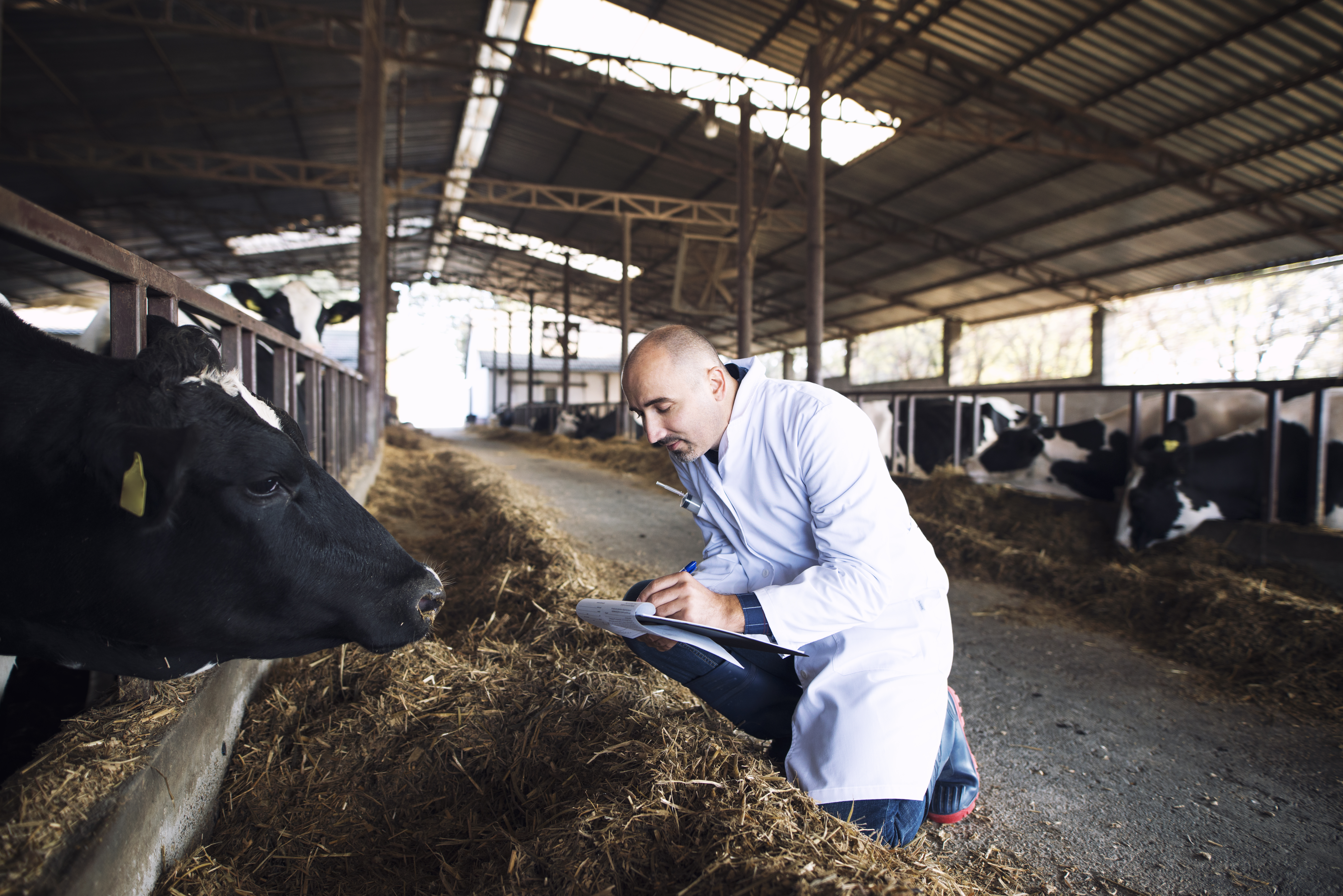
Examples from our antibiograms
Data from our laboratory (anonymized, sample of >500 isolates from 2024–2025) show:
- Staphylococcus aureus: 35% of isolates resistant to penicillin, 12% to 1st generation cephalosporins
- Streptococcus uberis: mostly susceptible to penicillin (>90%), growing resistance to tetracyclines (28%)
- Escherichia coli: increasing occurrence of ESBL strains (8%) resistant to 3rd generation cephalosporins
- CNS (coagulase-negative staphylococci): high resistance to oxacillin (43%) – a consequence of blanket dry cow therapy
These data show that resistance is not a theoretical problem—it is real in every Czech dairy herd and requires targeted diagnostics.
Read more about antibiogramsSelective Dry Cow Therapy as a Prevention Strategy
Blanket antibiotic dry cow therapy for all cows is currently the primary source of unnecessary antibiotic consumption in the dairy sector. Transitioning to selective dry cow therapy (SDCT) is a strategic decision with an immediate impact.
What selective dry cow therapy does for resistance
- 30–50% reduction in antibiotics during the dry period
- Reduced selection pressure on the teat canal microflora
- Lower incidence of resistant pathogenic bacteria
- Compliance with Regulation (EU) 2019/6—the regulation directly restricts the preventative use of antibiotics
How SDCT works in practice
Cows with a low SCC (<200,000 cells/ml), negative bacteriology, and no history of mastitis receive only an internal teat sealant—a mechanical barrier against infection. Cows with a confirmed infection receive targeted antibiotics based on an antibiogram.
Detailed procedures, criteria, and economics can be found in our guide: Selective Dry Cow Therapy in Dairy Cows.
Detailed procedures, criteria, and economics can be found in our guide: Selective Dry Cow Therapy in Dairy Cows.
What Farmers Can Do Right Now
Five concrete steps that can reduce antibiotic consumption by tens of percent in any herd without compromising health:

Do not initiate antibiotic therapy without diagnostics
For every case of mastitis, collect a milk sample before starting antibiotic treatment. The ClearMilk test or laboratory culture costs a few hundred CZK—delivering an immediate return on investment for every properly treated episode.
Switch to selective dry cow therapy
If you currently practice blanket dry cow therapy, it is the single largest area of unnecessary antibiotic consumption in primary milk production. Implementing SDCT takes 2–4 weeks (data collection, team training, procuring teat sealant inventory).
Routine herd antibiograms
Send microbiological samples from the herd at least 4 times a year—even in the absence of acute issues. This allows you to monitor resistance trends in your specific farm and prevent treatment failures.
Standardize protocols
Written SOPs (Standard Operating Procedures) for:
- Clinical or subclinical mastitis (action plan, when to call the veterinarian)
- Dry-off (selection criteria, application protocol)
- Withdrawal periods (cow identification, milk testing)
Educate the milking staff
Annual training on current procedures, responsible and prudent antibiotic use, and EU regulations. Most operational errors are not intentional—they simply stem from a lack of information.
Consequences of Improper Antibiotic Use in the Herd
If a farm does not implement resistance prevention, it risks:
Short-term impacts (1–2 years)
- Higher incidence of first-line mastitis treatment failure
- Extended treatment duration and withdrawal periods
- Higher consumption of "reserve" antibiotics (Category B)
- Risk of ISR-positive bulk tanks → fines
Medium-term impacts (3–5 years)
- Emergence of resistant strains within the herd
- Higher incidence of chronic mastitis
- Premature culling (chronically infected cows)
- Higher veterinary costs
Long-term impacts
- Loss of efficacy of standard antibiotics within the herd
- Regulatory risks (violation of Regulation (EU) 2019/6, SVA sanctions)
- Reputational impact on the farm/milk brand
- Contribution to the broader societal issue of antimicrobial resistance (One Health)
FAQ — Frequently Asked Questions
Antibiotic resistance is the ability of bacteria to resist the effects of antibiotics. In dairy herds, it primarily affects mastitis pathogens—Staphylococcus aureus, Streptococcus uberis, E. coli, and others. It arises from improper antibiotic use (blanket treatment, lack of diagnostics, inadequate dosage) that creates selection pressure. Bacteria become resistant, not the cows—however, a resistant strain spreads rapidly throughout the herd.
The primary causes are: blanket dry-off treatment of all cows without diagnostics, "blind" mastitis treatment without an antibiogram, insufficient treatment duration (bacteria survive, selecting for resistance), repeated use of the same preparation, and using critical antibiotics (EU Category B) as a first-line choice. Consequently, both commensal and pathogenic bacteria in the herd gradually acquire resistance genes.
Five concrete steps: (1) do not administer antibiotics without diagnostics—always perform a ClearMilk test or laboratory examination, (2) switch to selective dry cow therapy—30–50% savings in antibiotics, (3) routine antibiograms 4 times a year to monitor trends, (4) standardize farm protocols (clinical/subclinical mastitis, dry-off, withdrawal periods), (5) educate the milking staff on current procedures and EU regulations.
Regulation (EU) 2019/6 classifies antibiotics based on their priority for human medicine: A "Avoid"—prohibited in veterinary practice (vancomycin, carbapenems), B "Restrict"—only exceptionally, requires an antibiogram (3rd and 4th gen cephalosporins, fluoroquinolones), C "Caution"—use with caution (aminoglycosides, macrolides), D "Prudence"—preferred first choice (penicillins, tetracyclines). Most DC preparations (Orbenin, Synulox) fall under Categories C/D.
Since January 2022, Regulation (EU) 2019/6 prohibits Category A (colistin in certain contexts, glycopeptides, carbapenems, oxazolidinones) in veterinary practice and restricts Category B—3rd and 4th generation cephalosporins (Cefa Lak, ceftiofur) and fluoroquinolones (enrofloxacin) can only be administered following bacteriological identification and an antibiogram; they cannot be used as a first choice or preventatively.
An antibiogram determines which antibiotics a specific pathogen is susceptible or resistant to. Instead of blind treatment (success rate <50%), you administer targeted therapy with a success rate over 85%. Targeted treatment is shorter, requires lower dosages, and exerts less selection pressure on other bacteria in the herd. Routine antibiograms also reveal how resistance evolves in your specific herd.
In an antibiogram, each preparation is evaluated as: S (susceptible)—effective at standard dosage, eradicates the pathogen; I (intermediate)—requires a higher dosage or extended treatment; R (resistant)—antibiotic is ineffective, cannot be used. Susceptibility means the antibiotic eliminates (bactericidal) or suppresses (bacteriostatic) the bacterium at therapeutic concentrations. Resistance means the bacterium has defense mechanisms (enzymatic degradation, target site alteration, efflux pumps) and survives therapeutic doses.
Yes, several strategies reduce the need for antibiotics in a herd: teat sealants at dry-off (a mechanical barrier instead of antibiotics for uninfected cows), vaccination against E. coli (Startvac) and S. aureus, proper milking hygiene (pre-dipping, post-dipping, equipment disinfection), selective culling of chronically infected cows, and in the future, phage therapy or probiotics (currently under research). Alternatives do not replace antibiotics in severe cases, but they can significantly lower overall consumption.
A withdrawal period is the required duration following antibiotic administration during which milk must not enter the bulk tank for sale due to antibiotic residues. Length depends on the specific preparation: typically 3–7 days for intramammary treatment during lactation, 35–55 days for DC products at dry-off (plus 96 hours post-calving). Non-compliance leads to an ISR-positive bulk tank, milk disposal, fines from the dairy (50,000–200,000 CZK), and potential inspections by the SVA.
Short-term: higher first-line mastitis treatment failure, extended withdrawal periods, increased costs for Category B "reserve" antibiotics. Medium-term: emergence of resistant strains in the herd, more chronic mastitis cases, premature culling. Long-term: loss of efficacy of standard antibiotics in your herd, regulatory risks under Regulation (EU) 2019/6, contribution to the broader societal issue of antibiotic resistance. Every improperly administered dose of antibiotics is an investment in future problems.
Looking to implement targeted treatment in your herd?
Routine antibiograms are the first step toward preventing resistance. We will get back to you within 24 hours with a tailored plan for your herd.
Order Antibiogram