Staphylococcus aureus
Staphylococcus sector, large light pink colonies with a sheen.
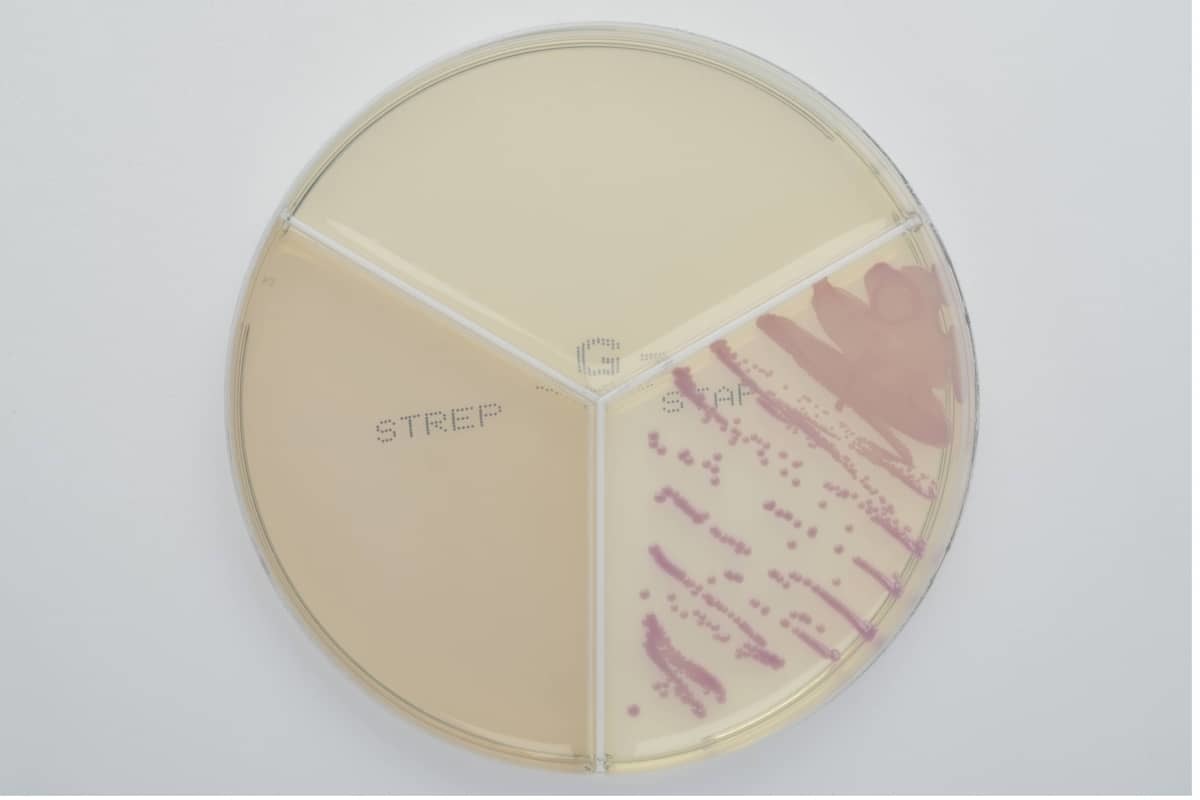
Staphylococcus aureus (in English "golden staphylococcus") is also known as the "king of purulent processes". Biochemically, it is very active, produces a number of toxins, is well adapted for life on the skin and mucous membranes, and causes a number of pyogenic (purulent) infections in both humans and animals. Staphylococcus aureus is also able to multiply well in food, tolerates high salt content, and some strains release large amounts of toxins into food that cause vomiting and diarrhea after ingestion.
Inflammations of the mammary gland caused by golden staphylococcus are both acute and chronic with various inflammatory symptoms up to severe purulent mastitis. Staphylococcal inflammations of the mammary gland are often recurrent because S. aureus survives treatment in the upper parts of the mammary gland.
Staphylococci are very resistant, and therefore they persist in the external environment for a long time. They also occur in healthy people, e.g. in the nasal cavity (in 30-50% of individuals), on the skin, in the mixture of bacteria on the tonsils, etc. If a person is healthy, staphylococci do not pose a threat, but rather act as a training for the immune system.
Staphylococcus aureus is the second most common cause of mastitis in cows in our conditions (15-20% of culturates ine of the mammalss). The source of the bacteria is another infected cow, cracked teats of udder, where staphylococci multiplicate, and the bacteria survive in the external environment; the source can also be small injuries of the hands of milkers, where staphylococci multiply.
Staphylococci are bacteria that are characterized by the development of antibiotic resistance, and therefore it is necessary to quickly identify the causative agent of mastitis, determine the antibiogram (sensitivity to antibiotics), and start targeted therapy.
Speed is important for diagnosis of infectious processes caused by the microorganism Staphylococcus aureus is important, the bacteria multiply quickly (one division in about 20 minutes), produce enzymes and toxins, and are very aggressive in the udder tissue.
