ClearMilkTest

Results within 24 hours

Reducing antibiotic use

Savings on medication costs

Intelligent mastitis diagnostics
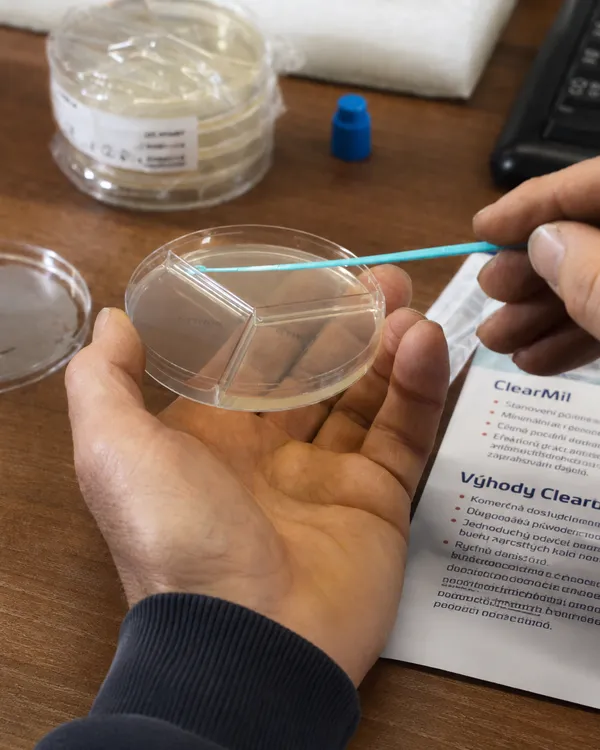
Results within 24 hours
Cultivation takes place directly on the farm by the next day.
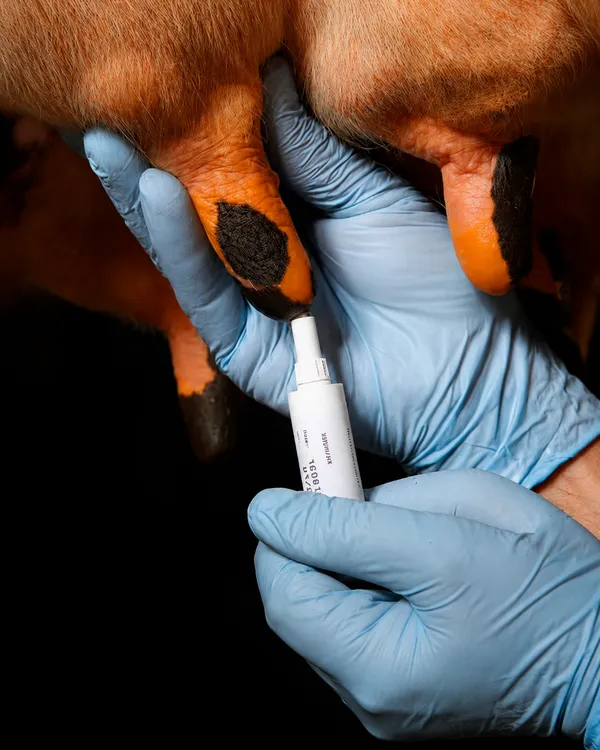
Reduced antibiotic use
Up to a 50% reduction in antibiotic consumption during mastitis treatment.
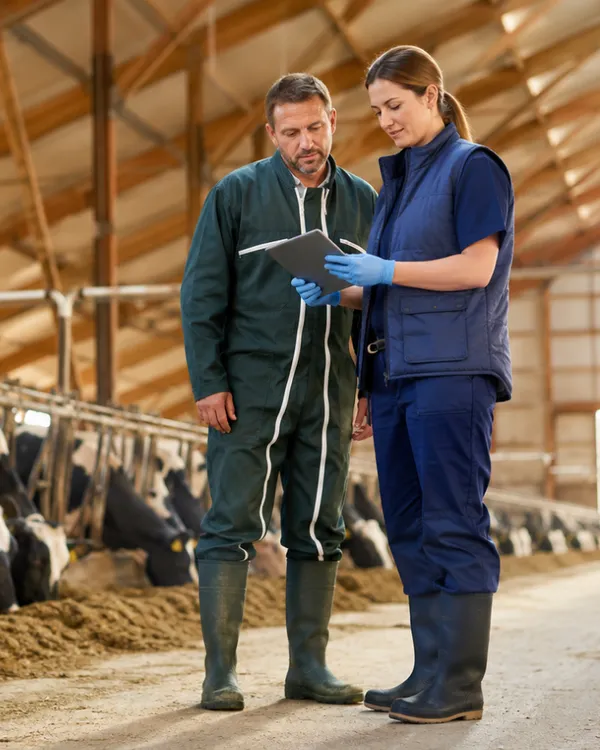
Cost reduction
A 30% to 50% savings on costs associated with mastitis.
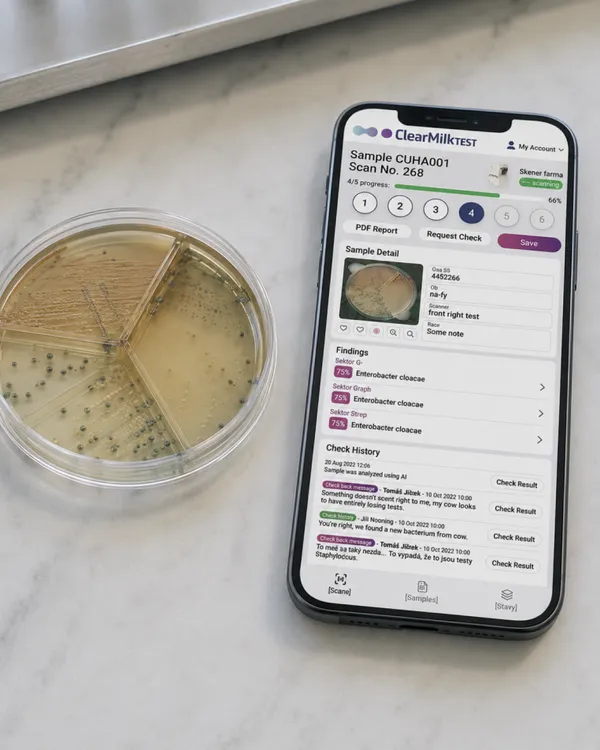
Laboratory accuracy
Artificial intelligence that provides you with an accurate diagnosis right in the palm of your hand.
Diagnostics on the farm with results within 24 hours
Sterile sample collection
After disinfecting the teat and milking the first 4-5 squirts, a milk sample is collected into a single-use sterile tube.

Sample application
Using a single-use sterile loop, the milk sample is immediately spread evenly over the entire surface of the agar in all three selective sectors.

Sample incubation
The dish is placed (upside down) in a small incubator directly in the farm's background, where cultivation takes place for 24 hours (± 2 hours) at a stable temperature of 37.5 °C.

Quick evaluation
The result, including the exact type of pathogen, is visually read based on the growth sector, quantity, color, and shape of the colonies, or automatically using the AI Reader.

Clearmilk AI Reader

Automatic evaluation
The device replaces personal visual reading. AI evaluates the cup with 90% accuracy, ensuring standardization of interpretation and eliminating the risk of human error.

Instant sharing and accelerated decision-making
The results of the analysis are promptly shared with the treating veterinarian or laboratory, which radically speeds up the clinical decision-making process regarding the initiation of targeted treatment.

Direct orders and data archiving
The device interface allows for direct order entry for the laboratory's associated services.

Health of Dairy Cattle: Trends from the World Buiatrics Congress 2026

What to do in case of early detection of colimastitis and how to properly set up treatment?
Summer season and the risk of colimastitis. Why does timing matter?
Speed on the farm, certainty in the lab. How to properly follow up on the ClearMilk test?
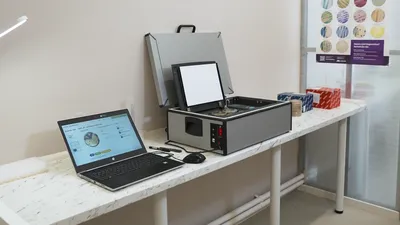
Pilot program Clearmilk AI Reader
Actual savings on farms

Thanks to the ClearMilk test, we can quickly and easily determine whether cows have a bacterial infection and, if so, what type it is. This saves us time and costs, and through targeted treatment, we significantly reduce the consumption of antibiotics.
ZD Všestary, Czech Republic
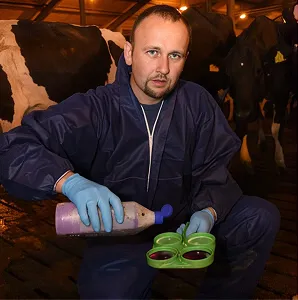
ClearMilk allows us to quickly and accurately diagnose both clinical and subclinical mastitis directly on the farm. Thanks to more precise diagnostics, unnecessary use of antibiotics has significantly decreased and the targeting of treatment has improved. I especially appreciate the speed of results and the clear interpretation.
University of Poznań, Poland

Do you have questions?
Clinically validated accuracy
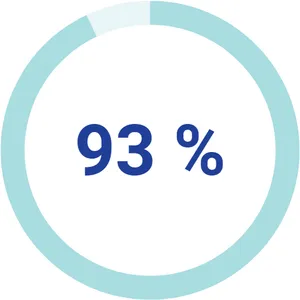
Laboratory Standards on the Farm
ClearMilk demonstrably achieves an accuracy of over 93%, significantly exceeding comparable alternative on-farm diagnostics.
Conclusions from independent studies confirm that the reliability of the test is fully comparable to reference laboratory cultivation. It thus provides a reliable microbiological basis for safe and immediate initiation of targeted therapy directly on the farm.

Farkašová, Z., Zigo, F., Halás, Š., Záhumenská, J., Pecka-Kiełb, E., & Vargová, M. (2024). Cultivation tests for rapid detection of mastitis pathogens in dairy cows. Acta Veterinaria Brno, 93, S37-S45
Our technology partners