Klebsiella pneumoniae
Sector G- (gram-negative rods), brightly blue large colonies.
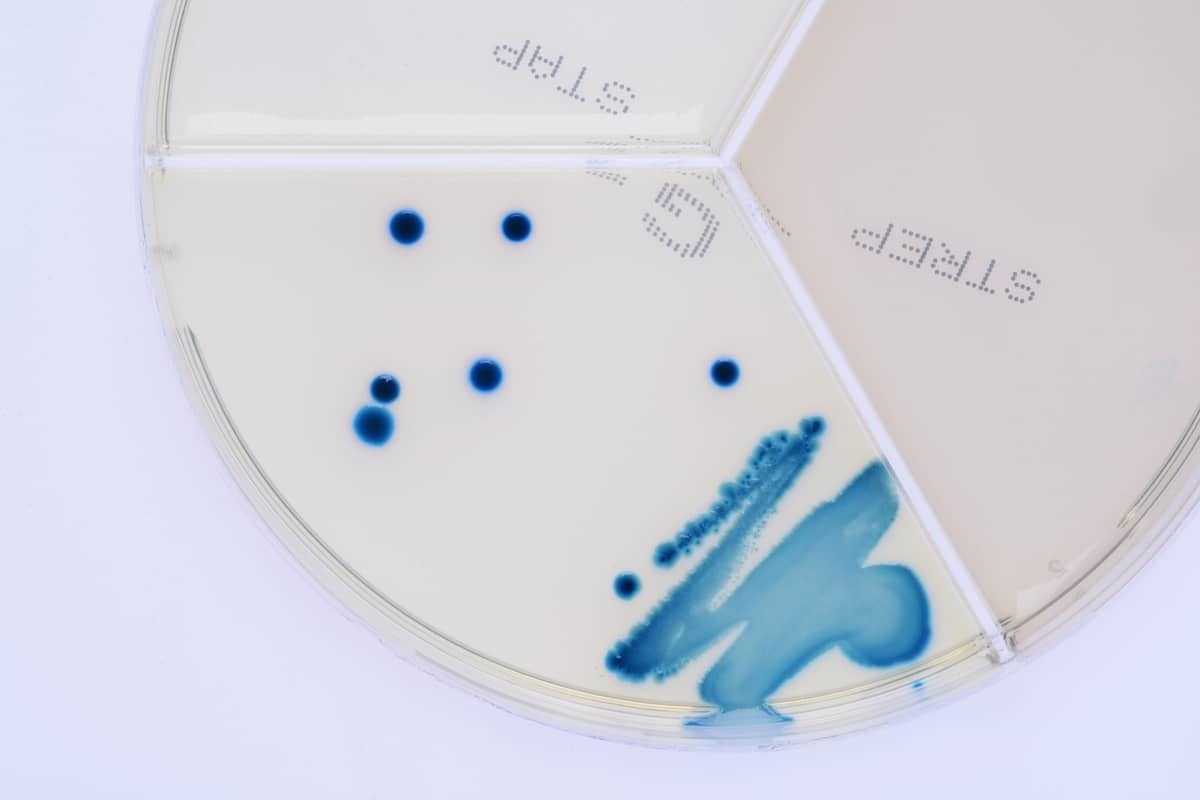
Klebsiella pneumoniae is a bacterium belonging to the group of so-called enterobacteria, which naturally occur in the intestines of humans and animals. It also includes other causes of mastitis: Enterobacter cloaceae, Enterobacter agglomerans, Proteus vulgaris, Serratia marcescens, and Serratia odorifera. These are gram-negative rods that grow on the CM test in the sector marked G-. Collectively, these mastitis cases are referred to as enterobacterial mastitis - they have severe acute course with very serious clinical symptoms. The mentioned microorganisms are naturally found in feces, and therefore also in bedding, on the skin of the udder, etc. They enter the mammary gland through a opened teat canal, via milking equipment , but also through blood transfer from the digestive tract and from minor skin injuries in the mammary gland. Clinically, the disease often breaks out under the influence of adverse factors that weaken the dairy cow's resistance (stress, change of feed...)
The clinical symptoms are usually severe - fever, muscle tremors, anorexia, cessation of rumination, diarrhea, and lying down, frequently ending in death within 24 hours.
Sometimes the infection Klebsiella pneumoniae occurs as chronic mastitis without disruption of the overall health status. There have even been described latent infections.
However, in mastitis caused by bacteria from the enterobacteria group, one must always count on an acute and severe course.
