Enterococcus faecalis
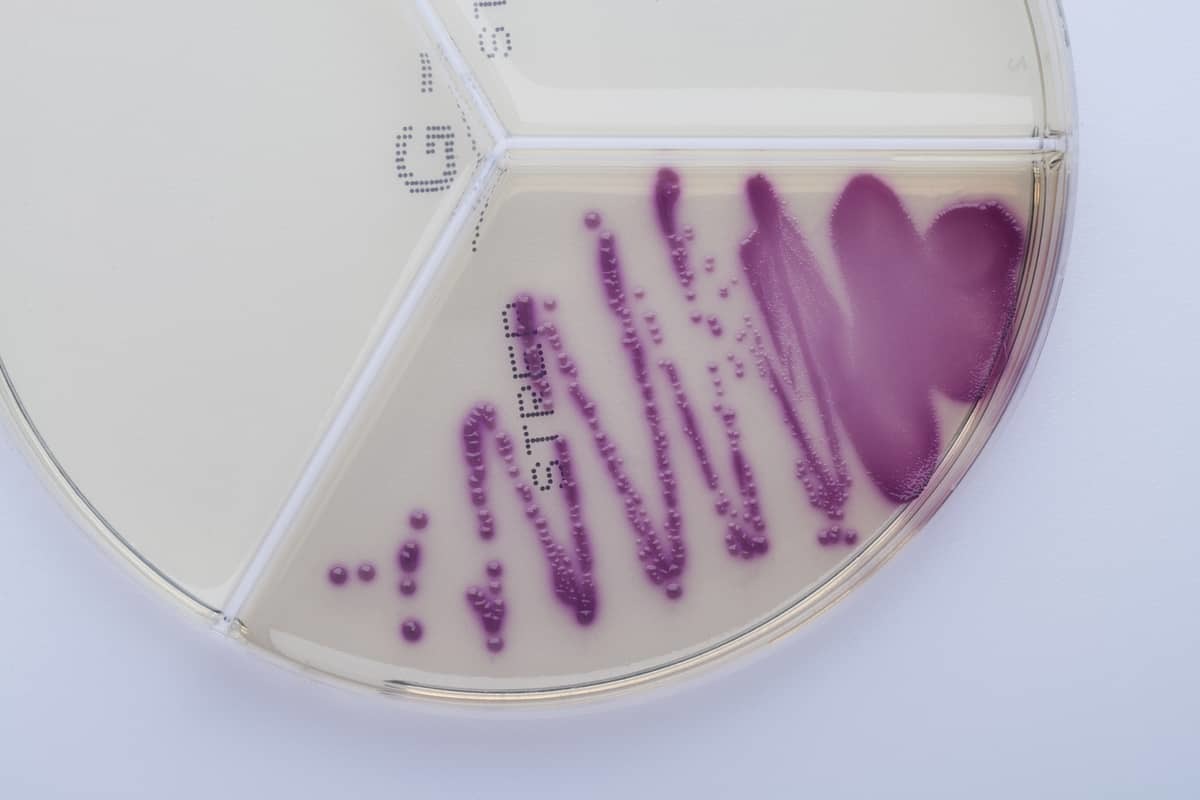
Strep sector (streptococci), small colonies of purple color.
Enterococci are bacteria commonly found in the digestive tract of humans and animals, entering the environment together with feces and penetrating the mammary gland through the teat canal.
Mastitis in dairy cows can be caused by the following species: Enterococcus faecalis, Enterococcus faecium, Enterococcus bovis, Enterococcus equinus. They usually cause subclinical mastitis, but can also be associated with clinical symptoms.
Enterococci are relatively resistant bacteria, remaining in the environment and capable of surviving longer in the mammary gland. They are quite resistant to higher temperatures (thermostable) and pasteurization does not destroy them, only damages them.
The proportion of mastitis caused by enterococci varies depending on the influence of predisposing factors in animals, herd size, adherence to hygiene principles, etc.
For the correct establishment of a diagnosis, microbiological examination of the secret from the mammary gland is necessary. On ClearMilk test, they grow in pink-purple colonies, with a lighter peak, in the sector for streptococci (strep) – see photo.
Regarding their increased resistance to antibiotics it is advisable to confirm with MALDI TOF or another bacteriological identification method and primarily to test sensitivity to antibiotics.
https://www.journalofdairyscience.org/ using the keyword Enterococcus faecalis, we found 470 scientific articles (English).
