Enterobacter cloacae
Sektor G- (gram-negative rods), large dark greenish-blue colonies with shine.
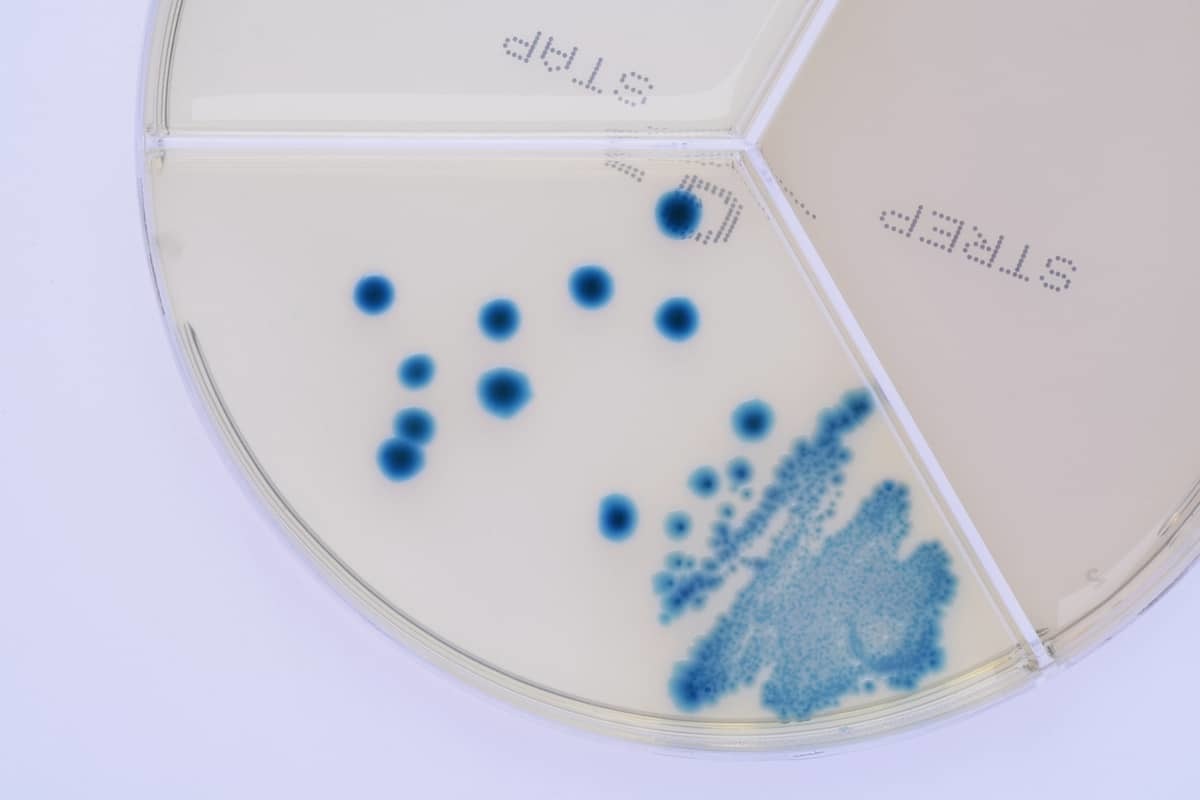
Enterobacter cloaceae is a bacterium belonging to the group of enterobacteria, which cause acute mastitis with severe impairment of overall health. This also includes two gram-negative rods that are the most significant causative agents of enterobacterial mastitis in our conditions - Escherichia coli and Klebsiella pneumoniae.
Enterobacteria are naturally found in the digestive tract of animals and humans, and therefore they are commonly found in bedding, on the skin, etc., and from there they enter the udder.
Before the occurrence of mastitis, it can be preceded by diarrhea, for example, with sudden changes in feeding, worsened zoonotic hygiene conditions, metabolic disorders etc. Mastitis caused by enterobacteria especially threatens high-yielding dairy cows and cows that have a reduced ability to close the teat canal.
