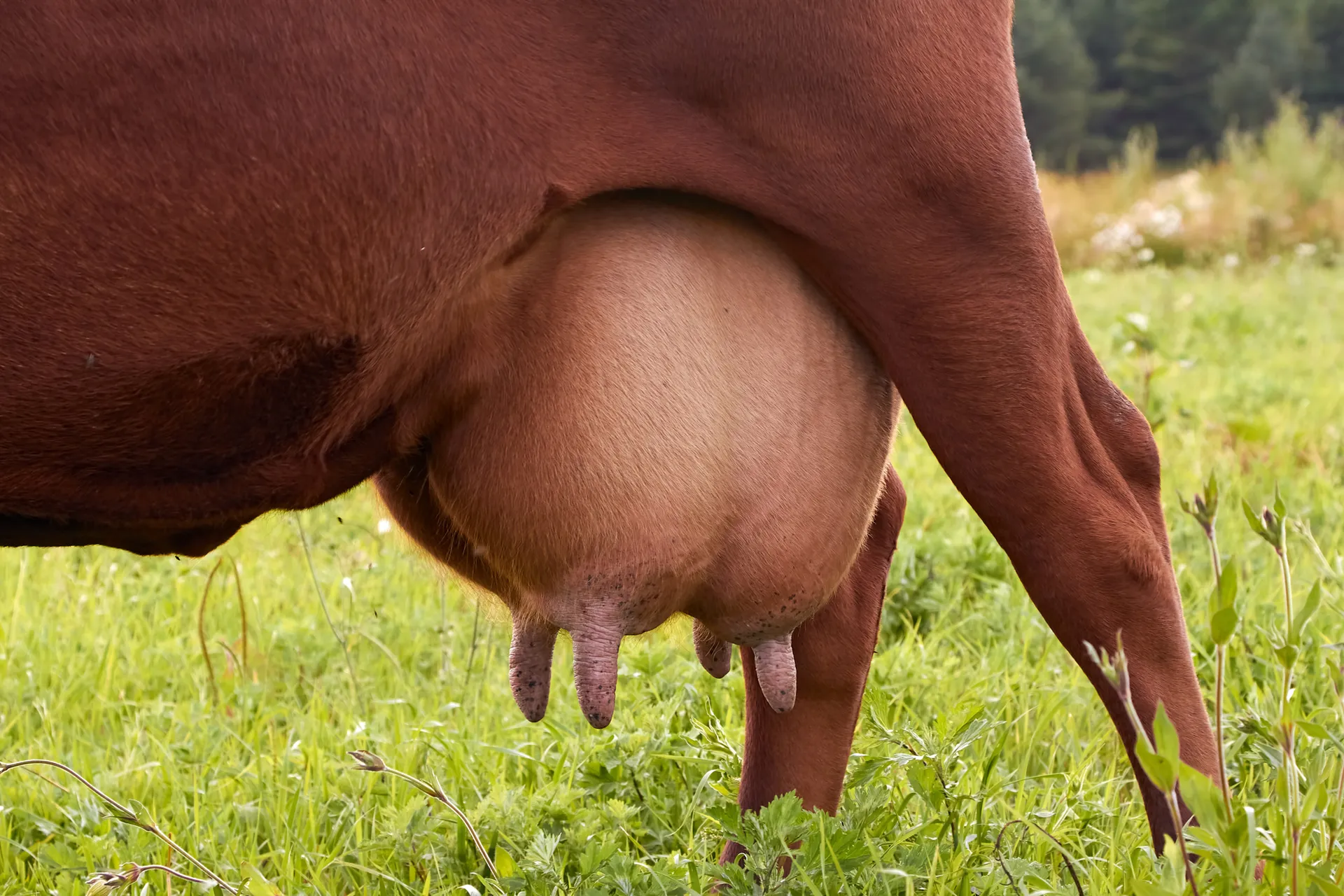
For the proper function of the mammary gland, its morphological properties as well as its own immune system with white blood cells, antibodies, and substances that inhibit bacterial growth, such as lactoferrin or the lactoperoxidase complex, are important. A significant defense mechanism is also the formation of a keratin plug in the teat canal.
The own immunity of the mammary gland is related to the overall defense capability of the organism and also includes local defense mechanisms. The mammary gland is densely interwoven with blood and lymphatic vessels. It thus defends against infection using white blood cells and antibodies contained in the blood.
The mammary gland has several defense systems through which the organism tries to prevent microorganisms from entering the udder and eliminate those that have already penetrated. A significant defense mechanism is the formation of a keratin plug (lactosebum) in the teat canal. It has been found that the plug of cows susceptible to mastitis contains higher amounts of oleic and linoleic acids, making it different.
Another significant factor is the ability of the sphincter of the teat canal to close well. Cows that are extremely easily milked (the canal opens easily) have a greater tendency towards mastitis.
The organism of the dairy cow secretes several essentially chemical components into the milk produced in the udder, which combine to form the so-called lactoperoxidase complex capable of killing bacteria. Similarly, lactoferrin, also secreted into the milk, works in that it inhibits the growth of those types of bacteria for which iron is necessary for their growth.
The own immunity of the mammary gland is connected with the overall defense capability of the organism, but there are also local defense mechanisms present in it. The mammary gland contains a large number of blood and lymphatic vessels and thus protects itself against infection through white blood cells and antibodies contained in the blood.
