Streptococcus agalactiae
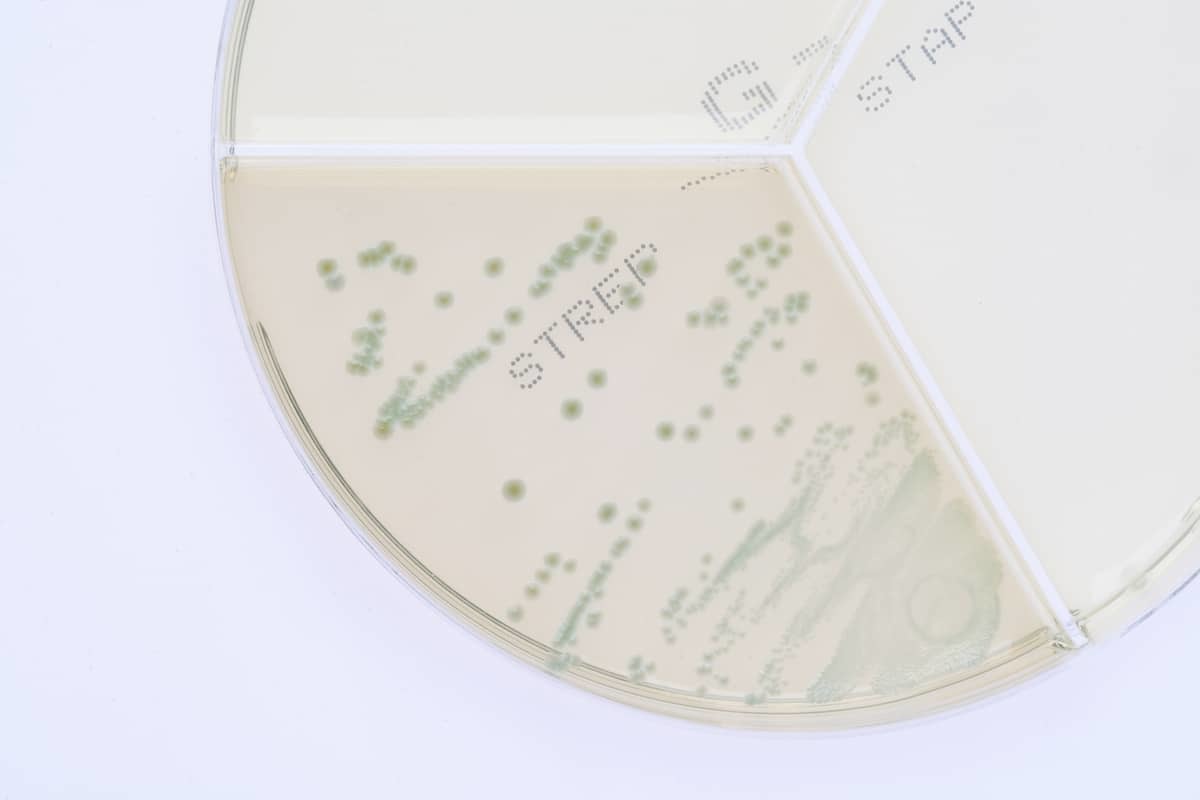
Strep sector (streptococci), small light blue-green colonies
Streptococcus agalactiae is one of the so-called infectious agents of mastitis in cattle, well adapted to the mammary gland and has an affinity for the mammary gland. It does not multiply in the external environment but is capable of surviving for several weeks.
The source of infection is the infected mammary gland of the cow, other animals, humans, infected environment. Infected cows are a constant source of infection in the herd, which the bacteria are excreted irregularly and may not be detected during microbiological control. In practice, this means that every cow coming from a farm where S. agalactiae occurs is considered suspicious of infection.
Clinical symptoms of mastitis caused by S. agalactiae are diverse, and from latent and subclinical forms, acute catarrhal mastitis often develops after calving.
In the ClearMilk test grows Streptococcus agalactiae in small colonies of bluish-green color within 24 hours after applying milk to the Petri dish. During antibiotic therapy, we choose narrow-spectrum antibiotics according to the antibiogram result, e.g., benzylpenicillin.
