When you need to know what to actually treat
Targeted Treatment Starts with Accurate Diagnostics
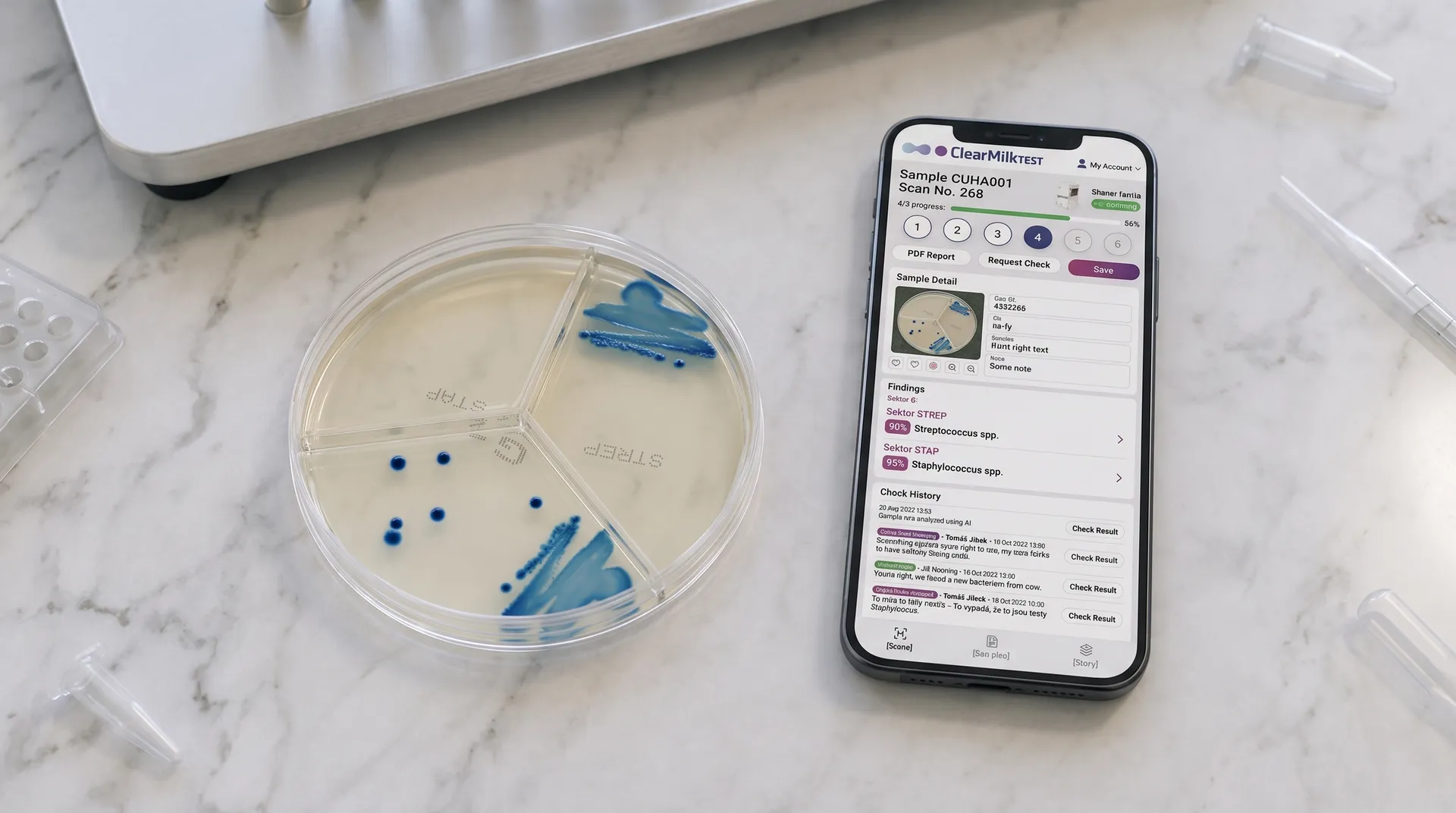
ClearMilk provides important, rapid information about whether a milk sample is bacteriologically positive and, if so, which type of mastitis pathogen is present. It also helps identify problematic udder quarters, individual animals or groups of animals.
Order AnalysisHowever, when deciding on antibiotic therapy, it is essential to know the susceptibility of the pathogen to specific antibiotics. Laboratory culture followed by an antibiogram helps select the appropriate treatment, reduce unnecessary antibiotic use and lower the risk of antimicrobial resistance.
Three Services in One Package
Three Services in One Package

Culture and Identification
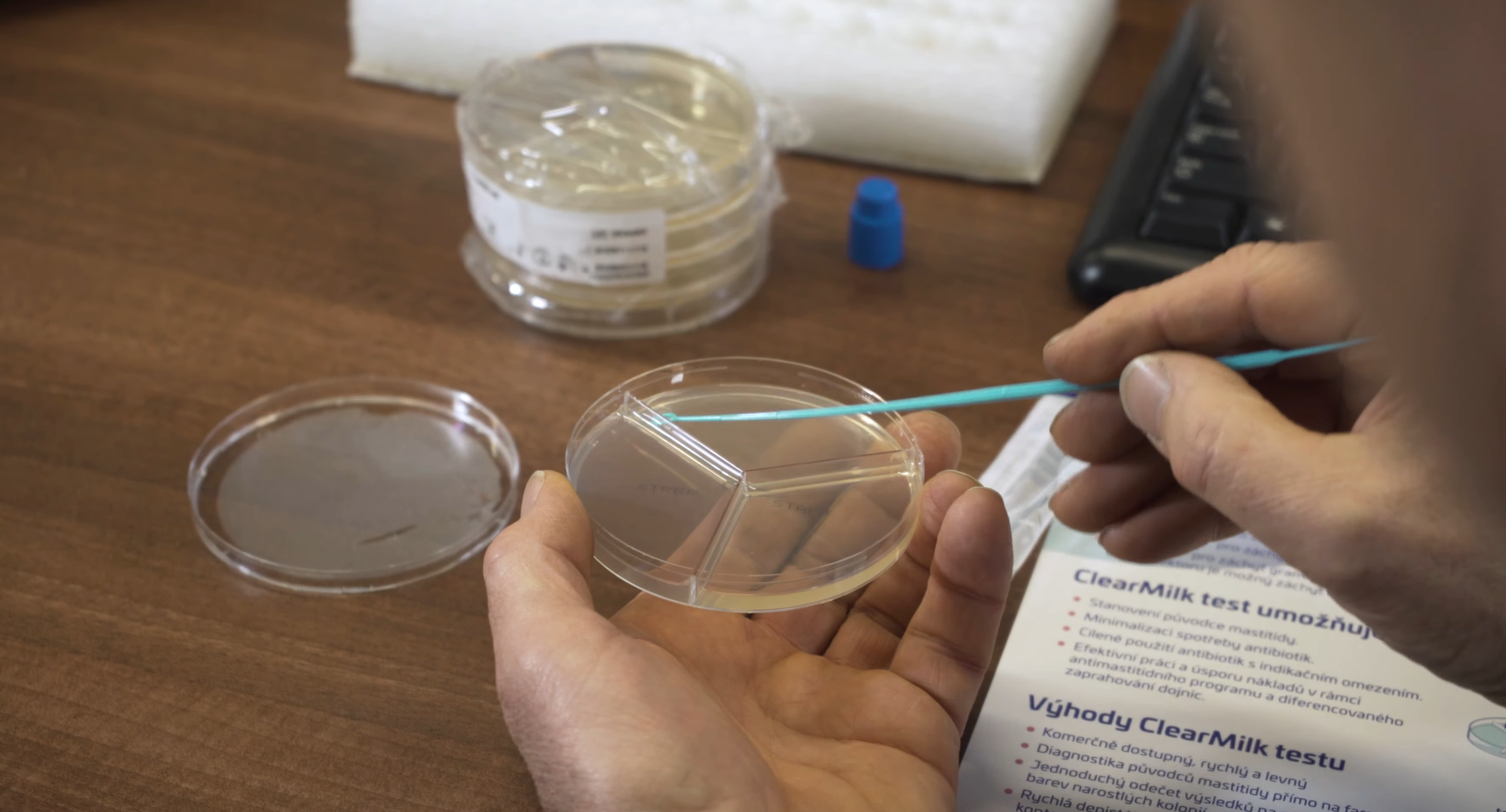
Conventional microbiological culture on chromogenic agars combined with the on-farm ClearMilk test. We identify:
- Gram-positive bacteria - Staphylococcus aureus, S. epidermidis, Streptococcus uberis, S. agalactiae, S. dysgalactiae
- Gram-negative bacteria - E. coli, Klebsiella pneumoniae, Enterobacter, Pseudomonas aeruginosa
- Yeasts and algae - Candida spp., Prototheca spp.
MALDI-TOF identification enables precise pathogen species determination (down to the subspecies level) within minutes. Results delivered within 24–48 hours of sample receipt.

Antibiogram—Susceptibility to 12+ Antibiotics
Following pathogen isolation, we perform a disk diffusion antibiogram (Kirby-Bauer method) using a panel of antibiotics relevant to veterinary practice in the Czech Republic. For each antibiotic, the result is:
- S - Susceptible (the preparation at standard dosage eliminates the pathogen)
- I - Intermediate (requires a higher dosage or extended treatment)
- R - Resistant (cannot be used; an alternative must be sought)
Tested panels include Categories C and D under Regulation (EU) 2019/6 (preferred choice in veterinary practice)—penicillins, 1st and 2nd generation cephalosporins, aminoglycosides, tetracyclines, macrolides, and others. Category B (3rd and 4th generation cephalosporins, fluoroquinolones) is tested only in indicated cases.

PCR Diagnostics
For rapid results (within 6 hours) or for pathogens that are difficult to culture, we offer PCR diagnostics. Key applications:
- Mycoplasma bovis - cannot be cultured conventionally; PCR is the standard
- Acute clinical mastitis - when time is critical
- Prior to selective dry cow therapy - rapid screening of large groups of cows
- Herd audit - prevalence survey of specific pathogens
When to Send a Sample for Laboratory Analysis
A microbiological milk analysis is essential in four key situations:

Prior to Drying Off a Cow
To execute selective dry cow therapy correctly, you need to know which cows are actually infected. Without bacteriology, decisions are based solely on somatic cell count (SCC)—which is insufficient.
Recommendation: Collect a sample 3–4 days prior to the planned dry-off for any cow with an SCC over 200,000 or a history of mastitis.

Recurrent Mastitis in the Herd
If a cow experiences 2+ clinical episodes during the same lactation, it is highly probable that:
- Phe pathogen is resistant to the selected antibiotic
- The pathogen species was misidentified (e.g., confusing Staphylococcus with Streptococcus)
- It is a chronic infection (S. aureus, S. uberis)

High Bulk Tank SCC (>400,000)
If your bulk tank milk SCC exceeds 400,000 cells/ml, the dairy processor will reduce the purchase price (-0.30 to -0.50 CZK/l) or reject the milk altogether. The cause is almost always subclinical mastitis in the herd—but the pathogen remains unknown.
Microbiological analysis of a bulk tank sample combined with targeted testing of individual cows with high SCC will help identify the source and reduce overall SCC. Find more in the How to Reduce Milk SCC section.

Herd Fails to Respond to the Chosen Antibiotic
If standard treatment (e.g., 1st generation cephalosporin for acute mastitis) fails in more than one instance, resistance within your herd is highly probable. A routine antibiogram (4× per year) will detect trends early—before widespread treatment failure occurs.
Procedure: How to Collect a Sample and What to Do Next

Milk Sample Collection
- Label the sample (cow ID and quarter) with a tag.
- Thoroughly clean the teat with a damp cloth, then dry.
- Disinfect the teat end using a disinfectant wipe (for 30 seconds).
- Strip out the first 4–5 squirts of milk into a strip cup with a black bottom.
- Fill a sterile tube with 5–10 ml of milk—do not touch the opening of the tube to the teat.
- Cap the tube securely.
- Store under refrigeration (4 °C) for a maximum of 24 hours prior to dispatch.
Choosing a Method—On-Farm Diagnostics vs. Laboratory
On-farm pathogen identification: ClearMilk test—a three-compartment Petri dish providing results in 22–26 hours right on your farm. Capable of identifying primary pathogens with an accuracy approaching laboratory diagnostics.
For definitive diagnostic confirmation + antibiogram: Send the sample to our laboratory. You will obtain precise species identification (MALDI-TOF) and susceptibility testing for 12+ antibiotics.
For definitive diagnostic confirmation + antibiogram: Send the sample to our laboratory. You will obtain precise species identification (MALDI-TOF) and susceptibility testing for 12+ antibiotics.
Shipping to the Laboratory
- Refrigerated transport (insulated cooler box with ice packs) - via courier or delivery service.
- Include the submission form with sample identification and contact details.
- Address: LabMediaServis s.r.o., Národní 84, 551 01 Jaroměř
- Phone for coordination: +420 725 945 953, +420 720 930 872
Results
- Culture + MALDI-TOF: 24–48 hours from sample receipt.
- Antibiogram: an additional 24 hours following pathogen isolation.
- PCR: within 6 hours for express orders.
- Results delivered via email complete with interpretation and recommendations.
Equipment and Team
Our microbiological team possesses long-standing experience in mastitis diagnostics:

MVDr. Zuzana Čermáková, Ph.D.
Laboratory Director
Specialization in clinical microbiology

MVDr. Pavel Novotný
Laboratory Director
Assists with implementing on-farm systems, interpreting results, and establishing treatment and prevention protocols
Pricing and Availability
| Service | Turnaround Time | Estimated Price |
| Culture + MALDI-TOF (1 sample) | 24–48 h | 350–600 Kč |
| Antibiogram (1 isolate) | +24 h | 120–240 Kč |
| PCR diagnostics (1 sample) | 6 h | 600–900 Kč |
| Volume discount (> 20 samples) | — | individual offer |
We will be happy to agree on a specific price for your herd upon initial contact—it depends on volume, frequency, and combination of services.
Get a QuoteFAQ — Frequently Asked Questions
An antibiogram is a laboratory test that determines the susceptibility of a specific isolated pathogen to antimicrobials. Standardized disks containing different antibiotics are placed on an agar plate inoculated with the bacterial isolate. Following incubation, the diameter of the zone of inhibition around each disk is measured to determine whether the bacterium is susceptible (S), intermediate (I), or resistant (R) to a specific preparation.
It depends on the objective: when diagnosing clinical or subclinical mastitis, or following a positive result during pre-dry-off testing, we evaluate whether the pathogen was recently tested for susceptibility. If not, antimicrobial susceptibility testing (AST) should always be performed prior to initiating antibiotic therapy. For monitoring herd trends, we ideally test a representative sample of recurrent pathogens 4 times a year.
Conventional culture + MALDI-TOF: 24–48 hours from sample receipt. Antibiogram: an additional 24 hours after pathogen isolation (total 48–72 h). PCR diagnostics: 6 hours for express orders. In acute cases where time is critical, PCR is the only option for rapid identification.
Procedure: clean the teat, disinfect the teat end, strip out 4–5 squirts of milk, then fill a sterile tube with 5–10 ml. Always take samples from a disinfected teat without touching any unsterile surfaces. Store under refrigeration (4 °C) for a maximum of 24 hours. Strict sampling hygiene is critical—a contaminated sample leads to incorrect results and improper treatment.
MALDI-TOF MS (Matrix-Assisted Laser Desorption/Ionization — Time of Flight Mass Spectrometry) is a modern, highly accurate method for identifying microorganisms based on the mass spectrum of bacterial proteins. From a small amount of bacterial culture, the system determines the pathogen species within minutes with over 95% accuracy. It is faster and more precise than conventional biochemical tests.
Culture propagates bacteria in the laboratory on an agar plate—yielding a live culture that can be tested for susceptibility (antibiogram). It takes 24–48 hours. PCR detects the DNA of specific pathogens directly in the sample without culturing—delivering results in hours, ideal for pathogens that are difficult to culture (Mycoplasma). While highly sensitive, PCR does not allow antibiogram testing (which requires a live culture). In practice, we combine both methods as needed.
Select an antibiotic designated as S (Susceptible)—ideally from Category D under Regulation (EU) 2019/6 (penicillins, tetracyclines) as a first-line choice. If multiple antibiotics test susceptible, select the antibiotic in consultation with your veterinarian based on: dosage form availability (intramammary vs. systemic formulations), withdrawal periods, cost, and previous experience. Avoid preparations marked R or I. In case of uncertainty regarding interpretation, consult our clinical specialist—MVDr. Pavel Novotný.
For a herd screening, we recommend 10–20 samples (depending on herd size): cows with high SCC, cows with clinical or subclinical mastitis within the last 60 days, primiparous cows in the puerperal period, and a random sample of cows from various herd groups. It is advisable to cover all pathogen types known to occur on the farm (if data is available). We will be happy to help you design a specific sampling plan.
Contact Us — Order an Analysis
Send a sample or schedule a consultation. We will get back to you within 24 hours with specific instructions for sampling, transport, and a price estimate.
Order an Analysis or Submit an Inquiry