Escherichia coli
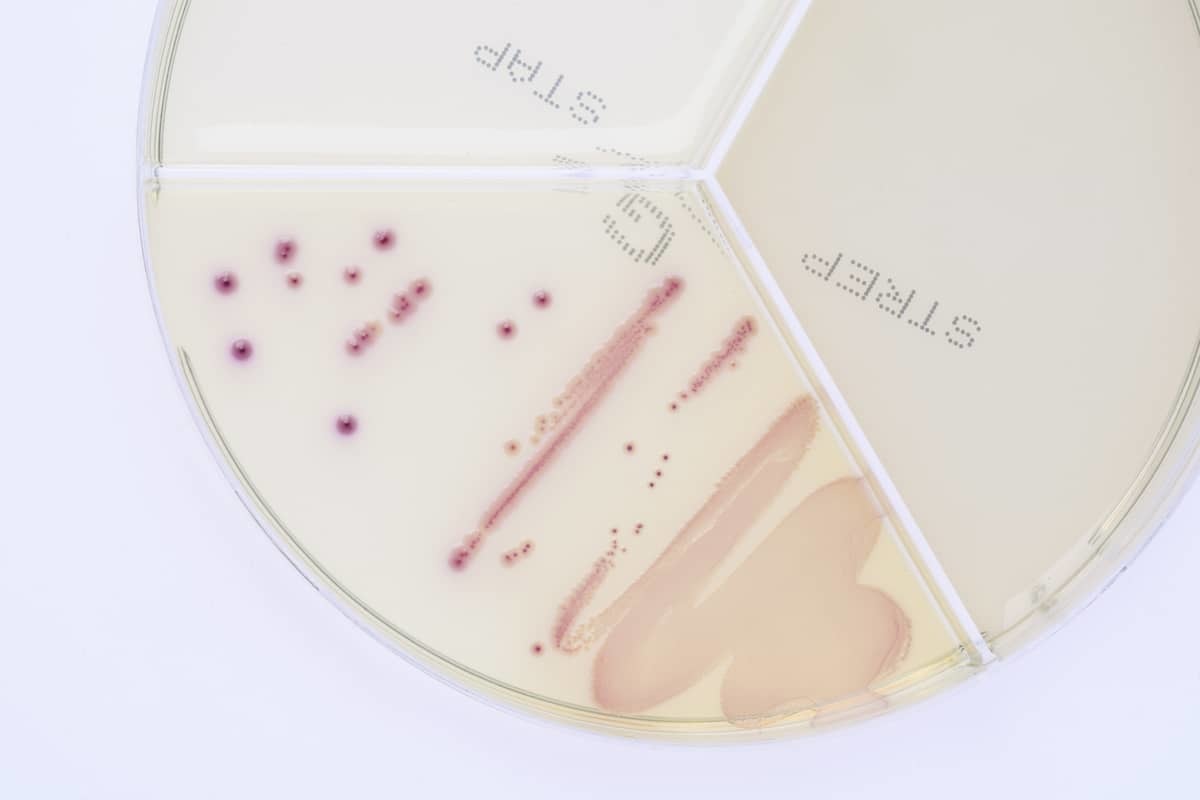
Sector G- (gram-negative rods), pink, large colonies with a darker center.
Mastitis caused by the bacterium Escherichia coli usually occurs as acute, sometimes even peracute diseases with a total disruption of health status. The mammary gland is swollen, firm, warm, and painful. The supramammary lymph nodes are significantly enlarged and painful to the touch. The cow has a fever, rapid pulse, rapid breathing, stops eating and ruminating, and a toxic syndrome may occur, culminating in lying down, shock, and death.
Escherichia coli is a bacterium that proliferates very actively (bacterial division more frequently than every 20 minutes) in the favorable environment of the mammary gland, and the pathological process develops rapidly within the mammary gland. Already 4 hours after infection, a fully developed inflammatory reaction is noted and after another 2 hours, fever and general symptoms of disruption of health statusappear.
Escherichia coli is found in large quantities in the digestive tract of cattle, other animals, and humans. To date, strains with a higher affinity for the mammary gland have not been found, so we can expect the ability to penetrate the udder from practically any strain of the bacteria and cause coliform mastitis. The onset of mastitis can be preceded by diarrhea, e.g., due to sudden dietary changes, worsened zoohygienic conditions, metabolic disorders, etc. Mastitis caused by E. coli particularly threatens high-yielding dairy cows and cows with reduced ability to close the teat canal - E. coli is very capable of adhering to tissues due to short projections emerging from the surface of the bacterial cell (so-called fimbriae) and then forming a biofilm and spreading upward into the udder.
K infection of the udder E. coli most commonly occurs within three weeks after calving, when the function of the teat sphincter is slowed. The closing process takes up to 30 minutes, compared to 10 minutes in laterěrší phases of lactation.
Escherichia coli has a number of subtypes, which differ in their degree of aggressiveness (toxin production, penetration into the udder). If the bacteria are flushed away during subsequent milking, they do not form a biofilm and do not remain in the milk, there will only be a temporary increase in somatic cells (of the order of days) as a reaction to toxin production and výkyvu in the conductivity of milk.
The other possibility is the formation of biofilm and proliferation within the udder, production of toxins, and damage to the epithelium (cellular lining), development of mastitis = inflammatory reaction, where even after successful treatment, healing lasts for weeks.
In the ClearMilk test the Escherichia coli grows in large, pink colonies. This test detects the bacteria very well within 24 hours and after examination, sensitivity to antibiotics must be performed to control the treatment already started, because E. coli is among the bacteria for which resistance to antibiotics occurs frequently.
