Colomastitis in dairy cows - when to intervene and how to treat
A rapid progression does not mean that every infection will result in a severe outcome. However, it does mean that in the case of an at-risk cow, we cannot afford to lose the initial hours.
At a glance
Coliform mastitis is an acute inflammation of the mammary gland associated primarily with Gram-negative coliform bacteria, most commonly Escherichia coli and Klebsiella spp. Most coliform infections may not follow a dramatic course, but severe cases can develop into systemic illness within a few hours. Timely assessment of the cow, aseptic milk sampling, rapid diagnosis and treatment guided by the severity of the condition are decisive.
What coliform mastitis is and why it can be dangerous
Coliform mastitis is a form of inflammation of the mammary gland caused by Gram-negative environmental bacteria. E. coli and Klebsiella spp. are the most commonly encountered pathogens; the broader group of Gram-negative environmental pathogens also includes Enterobacter, Serratia, Citrobacter and Proteus. The main reservoirs are faeces, bedding, soil, water and contaminated surfaces that come into contact with the teats between milkings.
Once inside the mammary gland, bacteria can multiply rapidly. Lipopolysaccharide (endotoxin) is released from the cell wall of Gram-negative bacteria, triggering a pronounced inflammatory response. However, clinical severity is not determined solely by the bacterial species: infection pressure, stage of lactation, the metabolic and immune status of the cow, and the speed of the body’s response also matter. This is why two cows infected with the same pathogen can present very differently.
For severe clinical coliform mastitis, the Merck Veterinary Manual reports a combined rate of death or culling due to agalactia of approximately 30–50 %. This figure applies to severe clinical cases, not to all coliform infections; many infections are, in fact, short-lived and can be controlled by the cow’s immune system. [1]
Practical significance
Managing coliform mastitis is not about “treating every E. coli case the same way”. The first steps are to recognise the severity of the case, collect a high-quality sample and quickly decide whether the cow primarily needs intensive supportive treatment, antimicrobial therapy, or both.
When to intervene: early warning signs and clinical symptoms
Modern milking parlours and monitoring systems can flag a problem before udder swelling becomes apparent during routine checks. An alarm alone does not establish a diagnosis, but it can shorten the time to individual assessment of the affected dairy cow.
- Increased electrical conductivity of milk.
- A rapid drop in milk yield or a sudden change in the course of lactation.
- Reduced feed intake and rumination.
- Reduced physical activity or unusual periods of lying down.
- Several changes occurring rapidly together within hours.
During individual assessment, we look for both local and systemic signs. The affected udder quarter may be swollen, warm, firm and painful. The milk is often watery or serum-like, with flakes, clots or traces of blood, and production from the affected quarter may drop sharply.
Systemic signs include fever, lethargy, loss of appetite, dehydration, and increased respiratory and heart rates. In severe cases, the cow may become recumbent or develop circulatory shock. The animal’s overall condition is often more important in determining urgency than the appearance of the milk alone.
When to call a veterinarian immediately
The cow cannot get up or is markedly lethargic • refuses feed and water • is dehydrated • has a markedly increased respiratory rate or signs of circulatory failure • milk yield drops sharply or the condition deteriorates rapidly • the udder is severely swollen and painful. In severe mastitis, do not wait for the culture result.
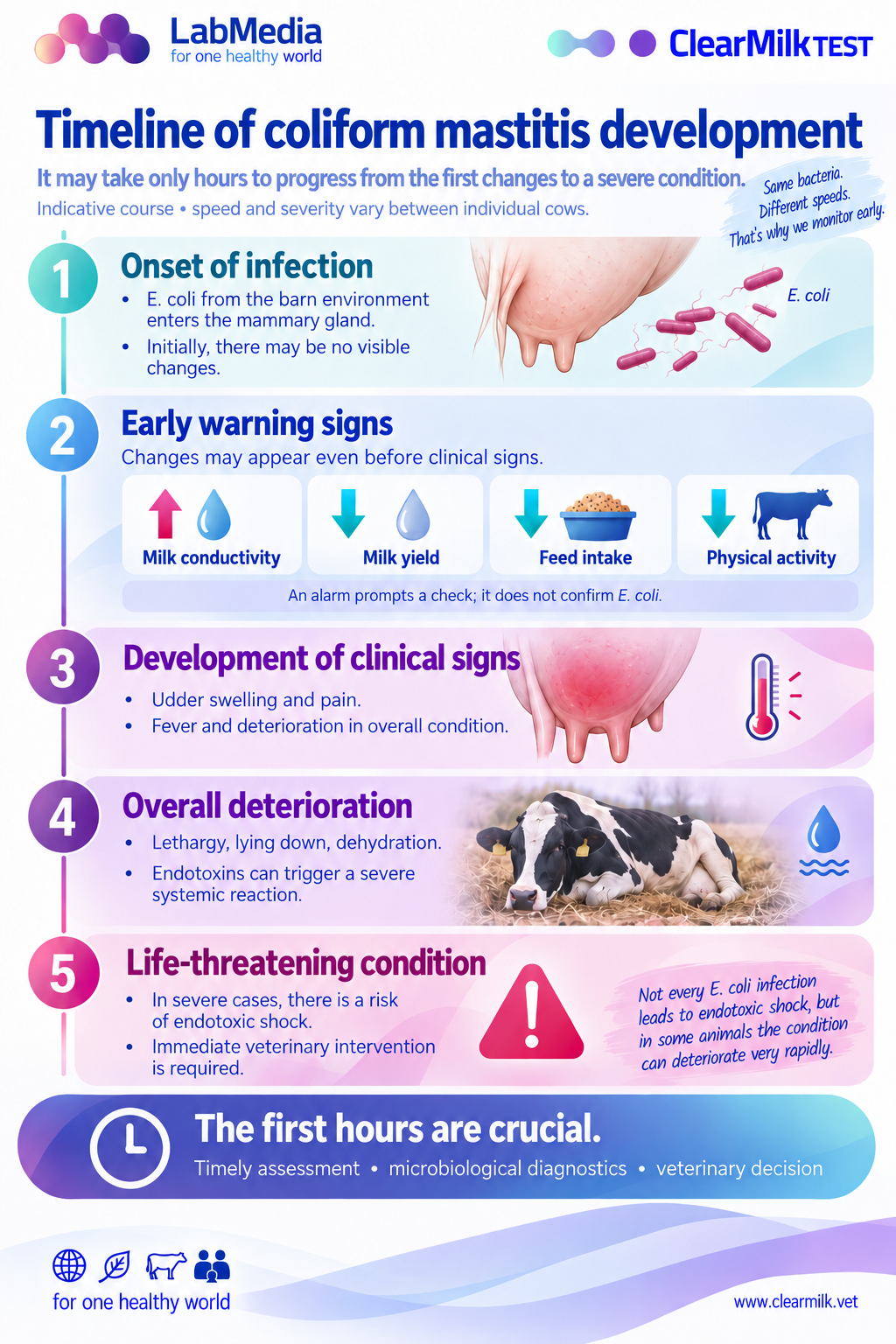
Fig. 1 - An indicative timeline of the development of coliform mastitis. The course varies considerably between cows; the diagram shows why it is important to respond to early changes.
Diagnosis: collect a sample, obtain a rapid initial assessment and seek laboratory confirmation as needed
The most important rule is to collect a milk sample aseptically before administering an intramammary or systemic antibiotic, provided the animal’s condition and the farm protocol allow it. In a severely ill cow, however, sampling must not delay stabilisation or contact with a veterinarian.
On the farm
- Clinical examination - temperature, hydration, appetite, ability to stand, milk yield and udder condition.
- Visual inspection of milk from all four quarters and aseptic collection of a sample from the affected quarter.
- ClearMilk test - a three-sector Petri dish with chromogenic agars enables preliminary identification of the main groups of mastitis pathogens directly on the farm within 22–26 hours. The G− sector can detect Gram-negative bacteria, including E. coli and Klebsiella spp. [2]
The culture result helps guide more targeted decisions and reduces unnecessary antibiotic use. In mild and moderate clinical mastitis, an appropriately designed farm protocol may allow a wait of approximately 24 hours for the culture result. In a systemically ill cow, however, supportive treatment is started immediately, and the veterinarian decides on antimicrobial treatment based on the clinical condition.
In the laboratory
Laboratory confirmation is useful in severe, inconclusive, recurrent or poorly responding cases. The laboratory can provide precise species identification using MALDI-TOF and an antibiogram. According to information from ClearMilk/LabMedia, culture with MALDI-TOF is available approximately 24–48 hours after receipt of the sample, with an antibiogram following isolation; PCR can be used for selected indications in express orders. [3]
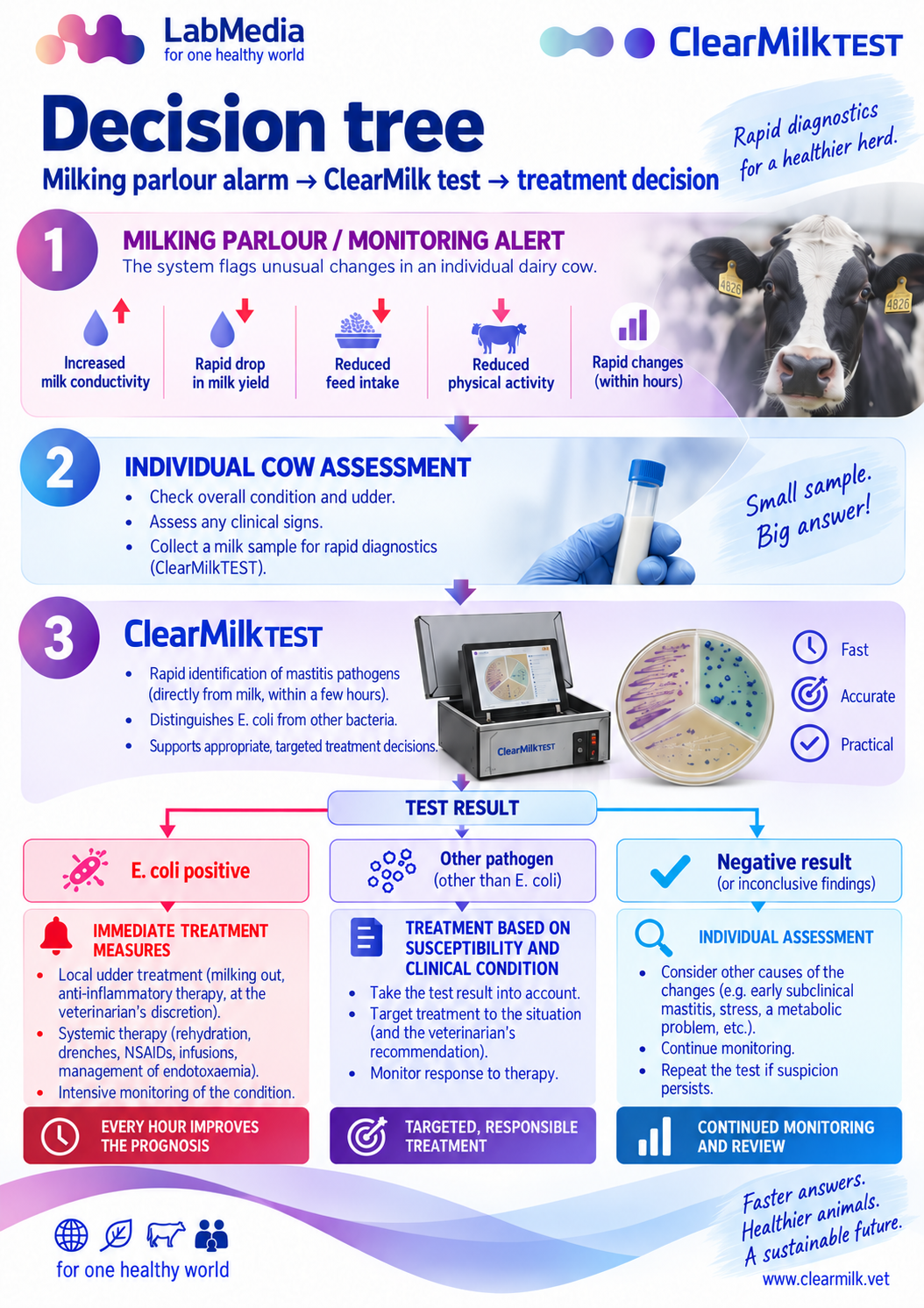
Fig. 2 - A practical decision-making process: milking parlour alarm → individual assessment → ClearMilk test → treatment decision based on the result and clinical condition.Fig. 2 — A practical decision-making process: milking parlour alarm → individual assessment → ClearMilk test → treatment decision based on the result and clinical condition.
Treating coliform mastitis: stabilise the cow first and select antibiotics based on the case
There is no single universal treatment protocol for coliform mastitis. Decisions are based on the severity of clinical signs, the suspected or confirmed pathogen, the cow’s history, local bacterial susceptibility and the authorised medicines available. Severe cases require emergency veterinary treatment.
1. Supportive treatment is crucial in severe cases
- Rehydration and restoration of circulation - oral or intravenous fluids according to the degree of dehydration and circulatory status.
- Non-steroidal anti-inflammatory drug (NSAID) therapy - to control pain, the inflammatory response and the systemic effects of endotoxin.
- Correction of metabolic and electrolyte imbalances according to clinical findings.
- Gentle emptying of the affected quarter and milk management according to the farm protocol; the exact frequency should be agreed with the veterinarian.
Both Cornell Quality Milk Production Services and current reviews of severe mastitis treatment emphasise that fluid and anti-inflammatory therapy are among the most important measures for systemically ill cows. [4]
2. Antibiotics are not automatically the same for every E. coli case
In many mild to moderate cases of Gram-negative mastitis, antibiotic treatment may not improve the outcome because the bacteria may already have been eliminated from the mammary gland by the time signs develop, and the clinical presentation is largely a consequence of the inflammatory response. In severe mastitis with systemic illness, however, parenteral antimicrobial treatment may form part of an intensive protocol - particularly given the possibility of bacteraemia. The specific active substance, dose, route of administration and duration of treatment must be determined by a veterinarian.
The European Medicines Agency classifies fluoroquinolones and third- and fourth-generation cephalosporins as Category B “Restrict”. In practice, this means they should only be considered when no clinically effective alternative from a lower category is available; whenever possible, their use should be based on susceptibility test results. [5]
3. Reassess treatment once the culture result is available
- If the result indicates Gram-negative bacteria and the cow is improving clinically, the veterinarian may adjust or discontinue antimicrobial therapy according to the protocol.
- If another pathogen is confirmed, management is guided by its expected susceptibility and the clinical severity.
- In persistent, recurrent or severe cases, obtain laboratory identification and an antibiogram.
- Always determine the withdrawal periods for milk and meat from the specific veterinary medicinal product and its SPC; a general “typical” period is not a safe substitute.
Preventing coliform mastitis: reduce teat contact with a contaminated environment
Coliform pathogens are primarily environmental. The greatest benefit therefore comes from a combination of measures that reduce the bacterial load in the environment and protect the teat canal, particularly during the dry period and around calving.
- Clean, dry bedding - regularly remove wet and soiled areas and reduce udder contact with faeces and standing water.
- Good pre-milking hygiene - effective pre-dipping, thorough drying with a disposable towel and clean gloves.
- Proper functioning of milking equipment - stable vacuum, timely replacement of teat liners, and reduced liner slips and overmilking.
- Carefully planned dry-period management - use internal teat sealants and selective dry cow therapy according to risk.
- Working with data - monitoring SCC, milk yield, conductivity, feed intake and activity helps detect changes earlier.
- Vaccination can form part of a comprehensive programme. In herds with recurring problems, the authorised indication for Startvac is to reduce the incidence of subclinical mastitis and the incidence and severity of clinical signs of mastitis caused by S. aureus, coliforms and coagulase-negative staphylococci. Vaccination does not replace hygiene and management. [6]Good pre-milking hygiene - effective pre-dipping, thorough drying with a disposable towel and clean gloves.
- Proper functioning of milking equipment - stable vacuum, timely replacement of teat liners, and reduced liner slips and overmilking.
- Carefully planned dry-period management - use internal teat sealants and selective dry cow therapy according to risk.
- Working with data - monitoring SCC, milk yield, conductivity, feed intake and activity helps detect changes earlier.
- Vaccination can form part of a comprehensive programme. In herds with recurring problems, the authorised indication for Startvac is to reduce the incidence of subclinical mastitis and the incidence and severity of clinical signs of mastitis caused by S. aureus, coliforms and coagulase-negative staphylococci. Vaccination does not replace hygiene and management. [6]
FAQ: coliform mastitis in dairy cows
Mastitis is the general term for inflammation of the mammary gland. Coliform mastitis is a subgroup associated with Gram-negative coliform bacteria, particularly E. coli and Klebsiella spp. It is characterised by an environmental origin and the potential for very rapid progression to systemic illness. However, not every coliform infection is necessarily severe, nor do all other forms of mastitis progress slowly.
The primary source is the environment - faeces, bedding, water, soil and contaminated surfaces. Coliform mastitis is therefore not classified among the typical contagious forms of mastitis spread mainly from an infected udder to other cows. However, poor hygiene or faulty milking equipment can also allow contamination to spread during milking.
Not automatically. The determining factors are the severity of the episode, the pathogen, the speed of clinical improvement, recurrent mastitis, production and the long-term prognosis for the quarter. The risk of death or culling is significantly higher in severe cases and with Klebsiella spp., but many cows continue producing after a properly managed episode.
Yes — three-sector culture can detect growth in the Gram-negative sector within 22-26 hours and distinguish it from the main Gram-positive groups. In a severely ill cow, however, the culture result must not delay clinical examination and supportive treatment.
There is no universal number of days. Intensive supportive treatment is guided by the cow’s clinical response, while any antimicrobial treatment is governed by the specific product and its SPC. Recovery of milk yield may lag behind improvement in the overall condition, and after a severe episode the affected quarter may remain impaired in terms of production.
Need to quickly distinguish mastitis pathogens in your herd?
The ClearMilk test enables preliminary identification of the main groups of mastitis pathogens directly on the farm within 22-26 hours and helps guide the next steps.
Order Clearmilk Test